
195/365 - Mark Earley, Kinvara, Co. Galway.
I donned a rather fetching bee suit on one of the hottest days of the year to talk to my pal, Mark Earley, about his passion project, beekeeping. We met in his house in Kinvara, Co. Galway and walked the 50m to the end of the back garden to meet his hives. Mark was gifted a bee keeping experience by his family back in 2017 and so began his “beekeeping age”. It was a hobby Mark has been slightly interested in since childhood. “There was an amazing teacher and work fellow called Denis Cusack, who taught me maths back in the nineties. He was a real character kind of ‘mad professor’ type in the nicest way possible. He used to do an annual lecture on bees in the school, so there was always a part of me that was really interested in learning more about bees.”
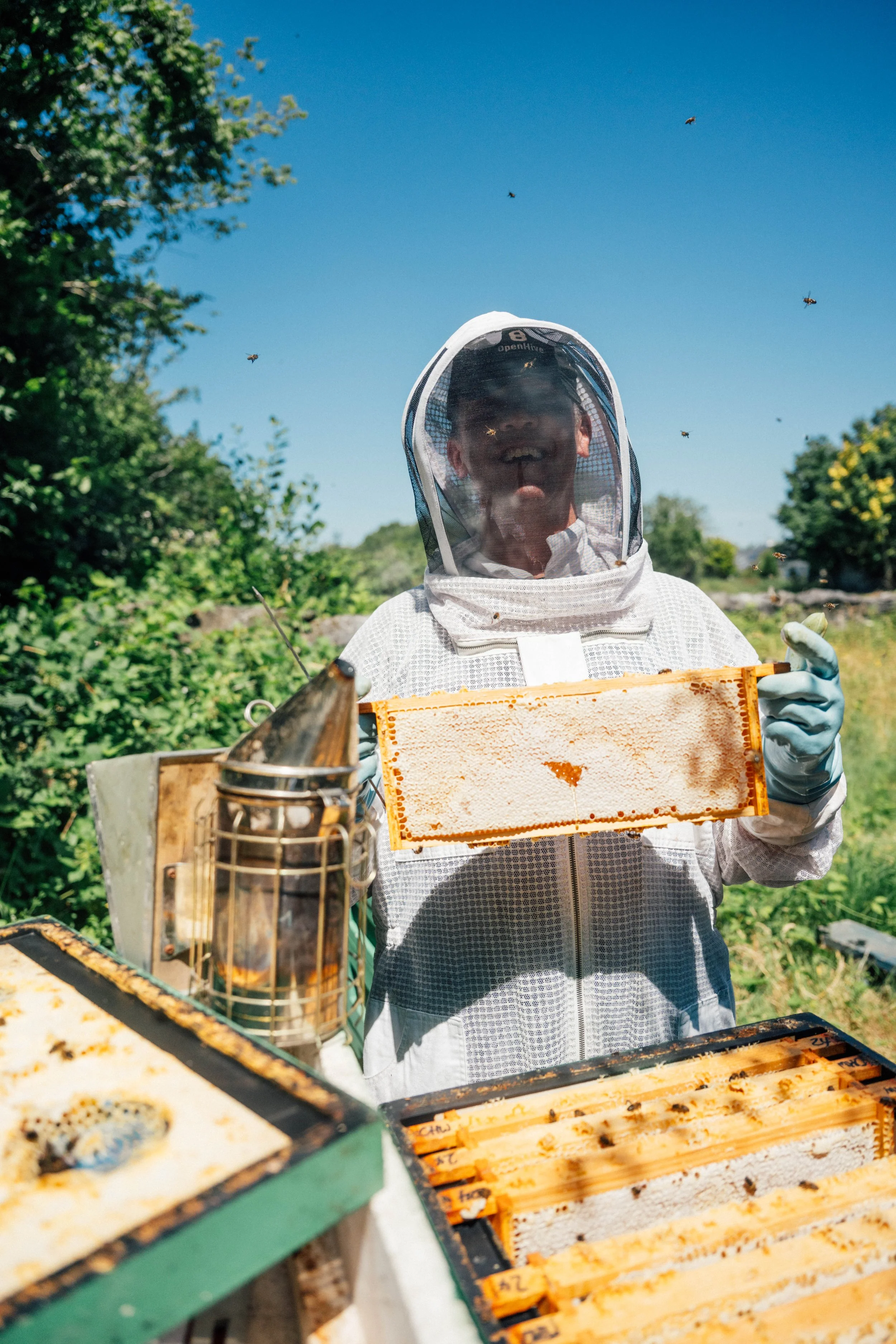
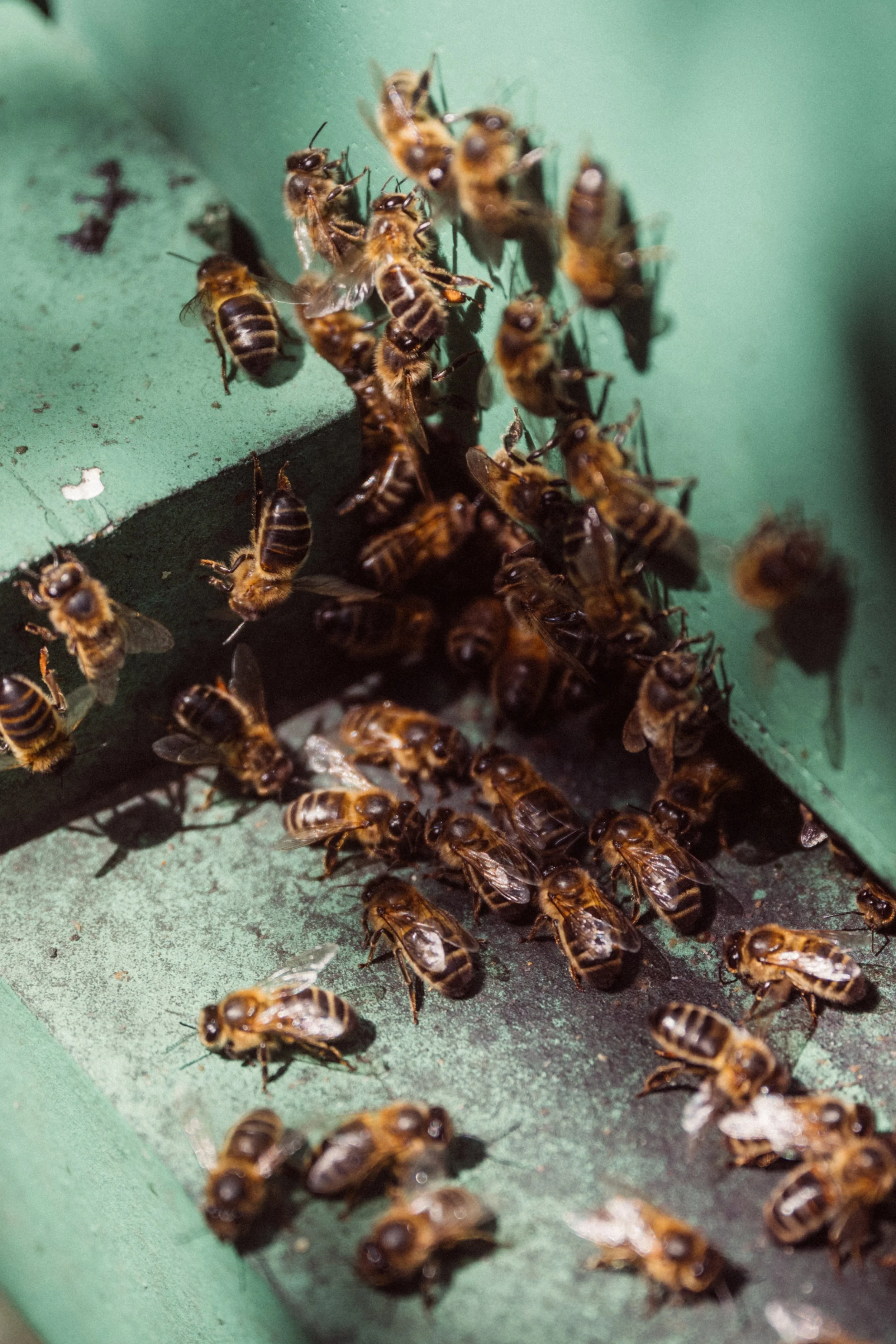
Mark soon realised his friend, Kyle Petrie, was also bee obsessed and after chatting on a night out, the pair started Open Hive Honey back in 2019. They now keep hundreds of hives across Ireland, and their primary goal is the conservation of Irish honey bees.
“Kyle is the brains behind Open Hive, he’s the master bee keeper, and together we have a simple goal of trying to conserve the native Irish honeybee. We sell honey to friends and family to fund our efforts. The problem we face is that the native Irish honeybee is being depleted by people importing bees from overseas, to try and apparently have a more productive bee. That's destroying the ecosystem which has evolved over hundreds of years. The role of the bee is essential in the conservation of the biodiversity of the Irish habitat. We want the Apis Mellifera Mellifera to be the norm both for local beekeepers and in the wild.”
I’m very eager to learn more about bees. I know they’re crucial to our world, but I’ve never really considered how we go about protecting them. Mark and I approach the hives and they start getting louder and louder, no doubt their ears are burning. I have so many questions and thankfully Mark is a patient and generous teacher.
“There are 3 different types of bee in every hive. There's our queen, who is obviously female and only one of her. There's worker bees, which are all female.They do everything from nursing the new bees to being an undertaker, security guards and foraging.They do every single task in the hive. And then we have drone bees, which are the males. Their only role is to mate with other queens. They fly off, they mate with the queen and they die as soon as they mate because their abdomen comes out and that's them done.”
Mark pulls out some honey comb, and thousands of bees swarm around us. It’s a very humbling experience. I’m overwhelmed with the beauty of what the bees have created, I’m respectful, in awe, but also a little afraid. Mark tells me that his is an unrequited love for the bees. They don’t remember him, or even appreciate him, they’ll sting him just as easily as they would me. “They’re not like having a pet. I'm making sure they have somewhere to live. And if they get a disease, I'm helping them beat it. That’s my role as a bee keeper, just helping them survive and thrive.”
Mark has now come full circle as The Open Hive delivers its own “beekeeping experience” courses, ensuring that more and more people know just how important the Apis Mellifera Mellifera are to Ireland.
MORE PORTRAITS:
TAGS: